Weight gain during pregnancy is a normal and important part of the process, as it supports the growth and development of the baby and helps prepare the mother's body for childbirth. However, the amount of weight gained can vary depending on several factors, including the woman's pre-pregnancy weight, overall health, and whether she is carrying one or more babies (twins, for example). Here’s a general guideline on weight gain during pregnancy:
1. General Recommendations by Pre-pregnancy BMI:
Underweight (BMI 18.5): 28-40 pounds (12.5-18 kg)
Normal weight (BMI 18.5–24.9): 25-35 pounds (11.5-16 kg)
Overweight (BMI 25–29.9): 15-25 pounds (7-11.5 kg)
Obese (BMI 30): 11-20 pounds (5-9 kg)
2. Breakdown of Weight Gain:
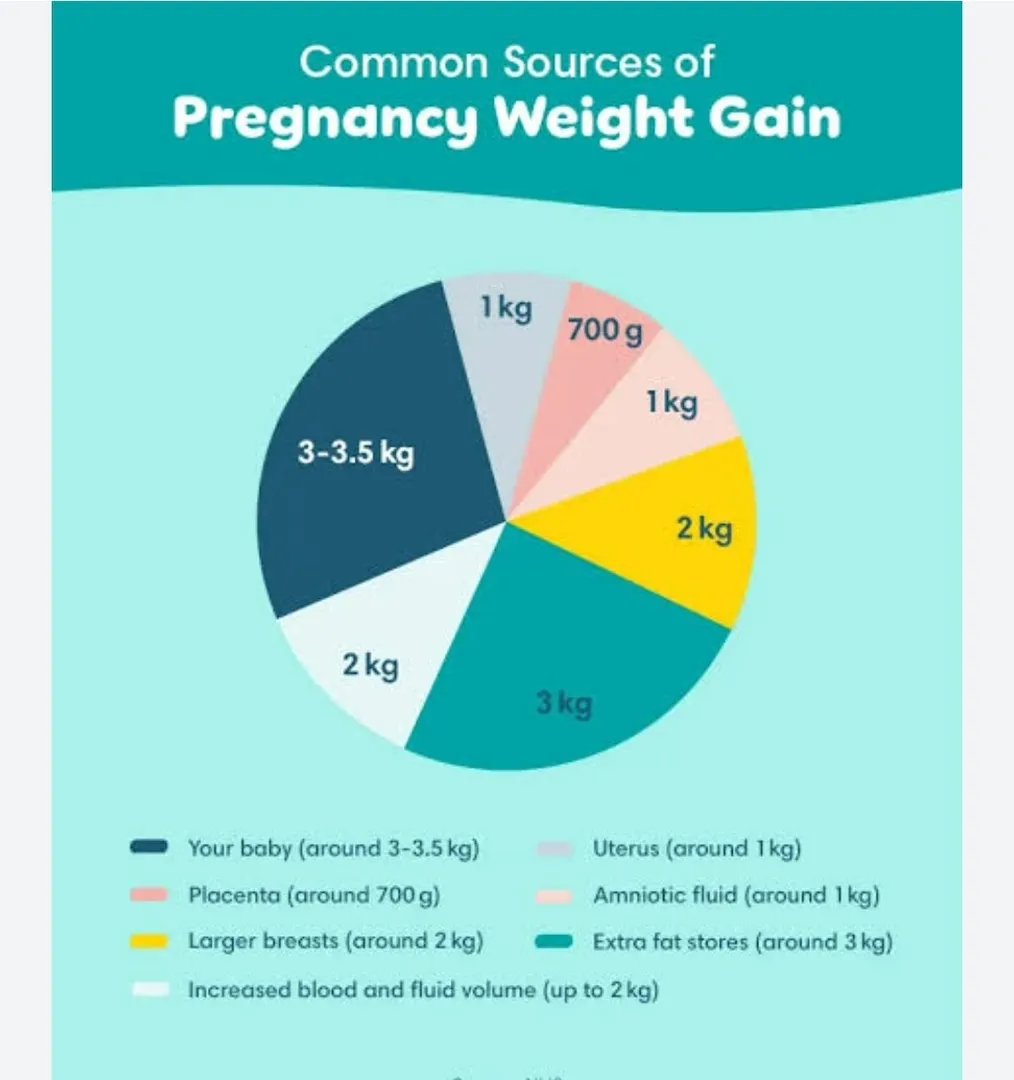
Weight gain is not all fat. It is distributed in several ways:
Baby: About 7-8 pounds (3.2-3.6 kg)
Placenta: About 1-2 pounds (0.45-0.9 kg)
Amniotic fluid: About 2 pounds (0.9 kg)
Increased blood volume: About 3-4 pounds (1.4-1.8 kg)
Breast tissue: About 1-3 pounds (0.45-1.4 kg)
Uterus enlargement: About 2 pounds (0.9 kg)
Fat stores: The remainder of the weight gain
3. Weight Gain Patterns:
In the first trimester, weight gain is typically minimal, ranging from 1-5 pounds (0.5-2.3 kg), as the baby is still small.
In the second and third trimesters, weight gain increases more significantly, especially in the last few months. The baby and other organs grow rapidly.
4. Factors Affecting Weight Gain:
Multiple pregnancies (twins, triplets): More weight gain is expected.
Diet and physical activity: A balanced diet with healthy foods, and appropriate physical activity can help control excessive weight gain. It’s important to follow the advice of a healthcare provider.
1. General Recommendations by Pre-pregnancy BMI:
Underweight (BMI 18.5): 28-40 pounds (12.5-18 kg)
Normal weight (BMI 18.5–24.9): 25-35 pounds (11.5-16 kg)
Overweight (BMI 25–29.9): 15-25 pounds (7-11.5 kg)
Obese (BMI 30): 11-20 pounds (5-9 kg)
2. Breakdown of Weight Gain:
Weight gain is not all fat. It is distributed in several ways:
Baby: About 7-8 pounds (3.2-3.6 kg)
Placenta: About 1-2 pounds (0.45-0.9 kg)
Amniotic fluid: About 2 pounds (0.9 kg)
Increased blood volume: About 3-4 pounds (1.4-1.8 kg)
Breast tissue: About 1-3 pounds (0.45-1.4 kg)
Uterus enlargement: About 2 pounds (0.9 kg)
Fat stores: The remainder of the weight gain
3. Weight Gain Patterns:
In the first trimester, weight gain is typically minimal, ranging from 1-5 pounds (0.5-2.3 kg), as the baby is still small.
In the second and third trimesters, weight gain increases more significantly, especially in the last few months. The baby and other organs grow rapidly.
4. Factors Affecting Weight Gain:
Multiple pregnancies (twins, triplets): More weight gain is expected.
Diet and physical activity: A balanced diet with healthy foods, and appropriate physical activity can help control excessive weight gain. It’s important to follow the advice of a healthcare provider.
Keywords