Infertility refers to the inability to conceive a child after one year of regular, unprotected sexual intercourse. It can affect both men and women, and the causes can vary widely. Infertility is generally diagnosed when a couple fails to conceive after trying for at least a year.
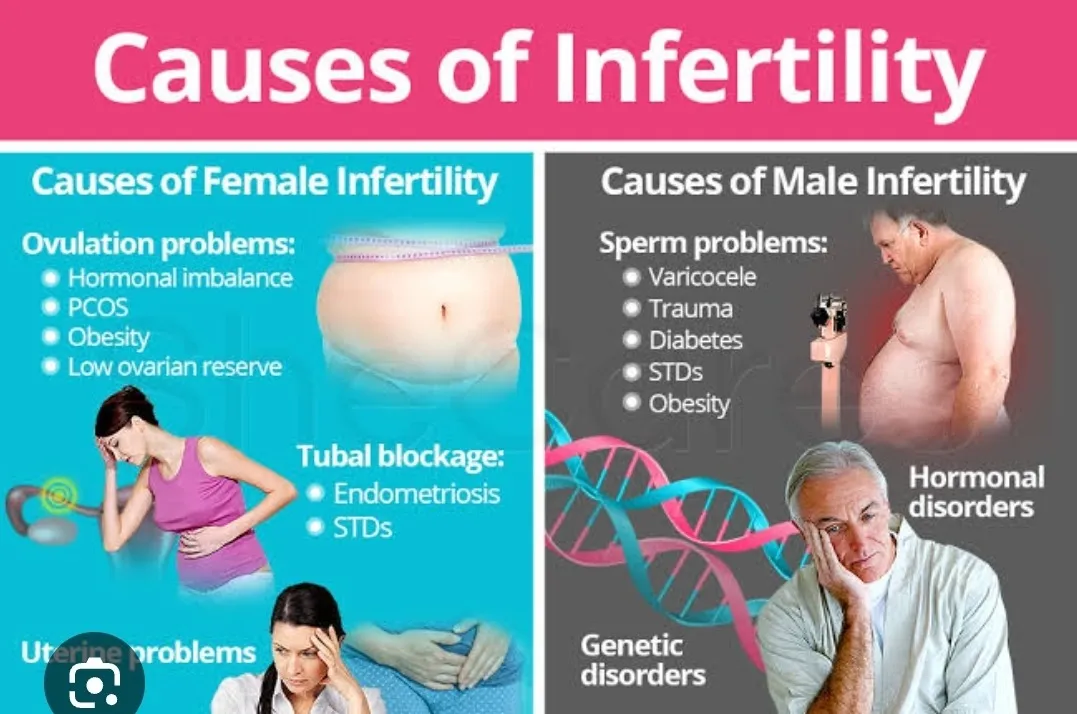
Causes of Infertility in Women:
Ovulation Disorders:
Polycystic Ovary Syndrome (PCOS): A common hormonal disorder that affects ovulation.
Hypothalamic Dysfunction: A malfunction in the part of the brain that regulates ovulation.
Premature Ovarian Failure: Early loss of ovarian function, leading to a lack of eggs.
Luteal Phase Defect: An insufficient progesterone production after ovulation, affecting implantation.
Blocked or Damaged Fallopian Tubes:
Conditions like pelvic inflammatory disease (PID), endometriosis, or previous surgeries can block or damage the tubes, preventing sperm from reaching the egg or interfering with embryo transport.
Endometriosis:
Tissue similar to the uterine lining grows outside the uterus, affecting the ovaries, fallopian tubes, and surrounding organs, which can impair fertility.
Uterine Problems:
Structural issues, such as fibroids, polyps, or congenital abnormalities of the uterus, can interfere with implantation or pregnancy.
Age:
Female fertility declines with age, especially after age 35, due to a reduction in both the quantity and quality of eggs.
Hormonal Imbalances:
Causes of Infertility in Women:
Ovulation Disorders:
Polycystic Ovary Syndrome (PCOS): A common hormonal disorder that affects ovulation.
Hypothalamic Dysfunction: A malfunction in the part of the brain that regulates ovulation.
Premature Ovarian Failure: Early loss of ovarian function, leading to a lack of eggs.
Luteal Phase Defect: An insufficient progesterone production after ovulation, affecting implantation.
Blocked or Damaged Fallopian Tubes:
Conditions like pelvic inflammatory disease (PID), endometriosis, or previous surgeries can block or damage the tubes, preventing sperm from reaching the egg or interfering with embryo transport.
Endometriosis:
Tissue similar to the uterine lining grows outside the uterus, affecting the ovaries, fallopian tubes, and surrounding organs, which can impair fertility.
Uterine Problems:
Structural issues, such as fibroids, polyps, or congenital abnormalities of the uterus, can interfere with implantation or pregnancy.
Age:
Female fertility declines with age, especially after age 35, due to a reduction in both the quantity and quality of eggs.
Hormonal Imbalances:
Keywords