Pelvic Inflammatory Disease (PID) is an infection of a woman's reproductive organs, including the uterus, fallopian tubes, and ovaries. It is often caused by sexually transmitted infections (STIs) like chlamydia or gonorrhea, but can also result from other bacteria entering the reproductive tract.
🔬 Causes of PID
Most commonly caused by untreated STIs, especially:
Chlamydia trachomatis
Neisseria gonorrhoeae
Can also occur after:
Childbirth
Miscarriage or abortion
Insertion of an intrauterine device (IUD) (rarely)
Pelvic surgery
⚠️ Symptoms of PID
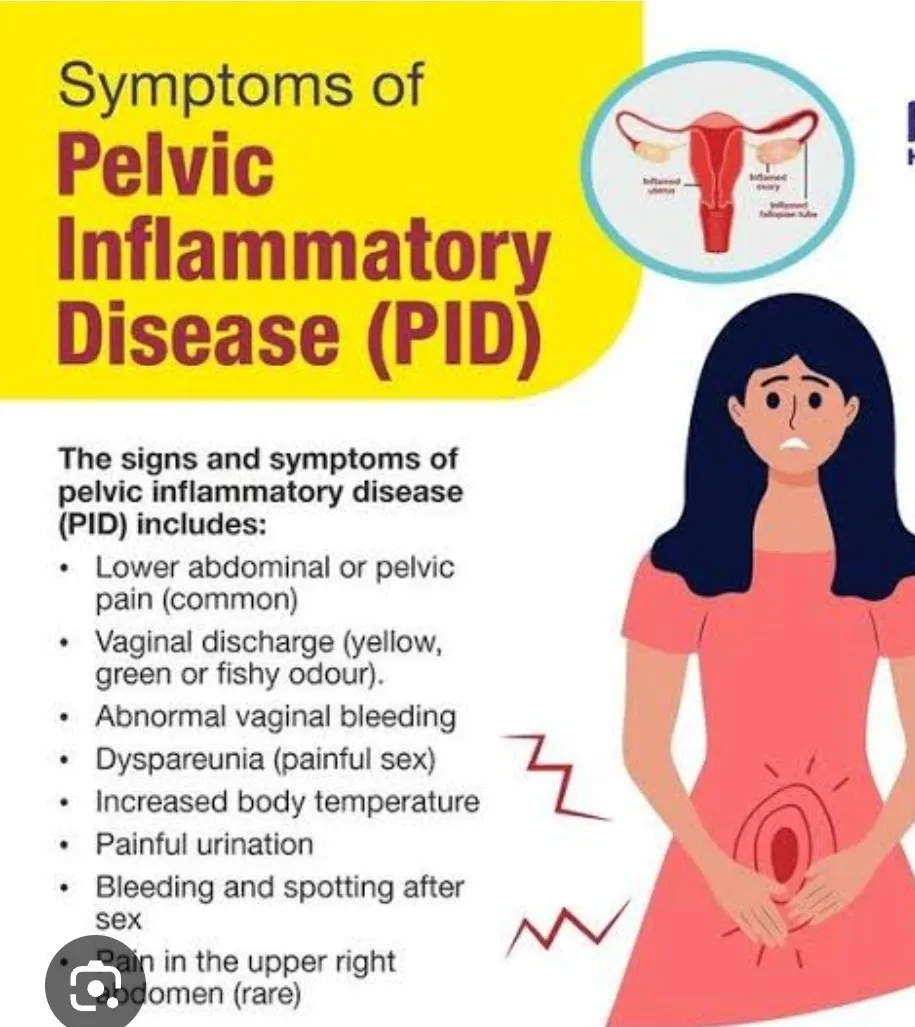
Some women may have no symptoms at all, but common signs include:
Lower abdominal or pelvic pain
Fever
Unusual vaginal discharge (possibly with a bad odor)
Pain during sex
Painful or difficult urination
Irregular menstrual bleeding
If untreated, PID can lead to serious complications, including:
Chronic pelvic pain
Infertility
Ectopic pregnancy (pregnancy outside the uterus)
Abscess formation in the fallopian tubes or ovaries
🧪 Diagnosis
Doctors usually diagnose PID based on:
Symptoms and physical exam
Pelvic examination
Swabs for STIs
Ultrasound or other imaging if needed
💊 Treatment
Antibiotics are the main treatment and should be started as soon as PID is suspected — even before test results come back.
Sexual partners should also be tested and treated to prevent reinfection.
In severe cases, hospitalization or surgery may be necessary.
🛡️ Prevention
Use condoms consistently and correctly
Get regular STI screenings
Ensure prompt treatment of any STIs
Limit the number of sexual partners
Avoid douching, which can push bacteria deeper into the reproductive tract
🔬 Causes of PID
Most commonly caused by untreated STIs, especially:
Chlamydia trachomatis
Neisseria gonorrhoeae
Can also occur after:
Childbirth
Miscarriage or abortion
Insertion of an intrauterine device (IUD) (rarely)
Pelvic surgery
⚠️ Symptoms of PID
Some women may have no symptoms at all, but common signs include:
Lower abdominal or pelvic pain
Fever
Unusual vaginal discharge (possibly with a bad odor)
Pain during sex
Painful or difficult urination
Irregular menstrual bleeding
If untreated, PID can lead to serious complications, including:
Chronic pelvic pain
Infertility
Ectopic pregnancy (pregnancy outside the uterus)
Abscess formation in the fallopian tubes or ovaries
🧪 Diagnosis
Doctors usually diagnose PID based on:
Symptoms and physical exam
Pelvic examination
Swabs for STIs
Ultrasound or other imaging if needed
💊 Treatment
Antibiotics are the main treatment and should be started as soon as PID is suspected — even before test results come back.
Sexual partners should also be tested and treated to prevent reinfection.
In severe cases, hospitalization or surgery may be necessary.
🛡️ Prevention
Use condoms consistently and correctly
Get regular STI screenings
Ensure prompt treatment of any STIs
Limit the number of sexual partners
Avoid douching, which can push bacteria deeper into the reproductive tract
Keywords